


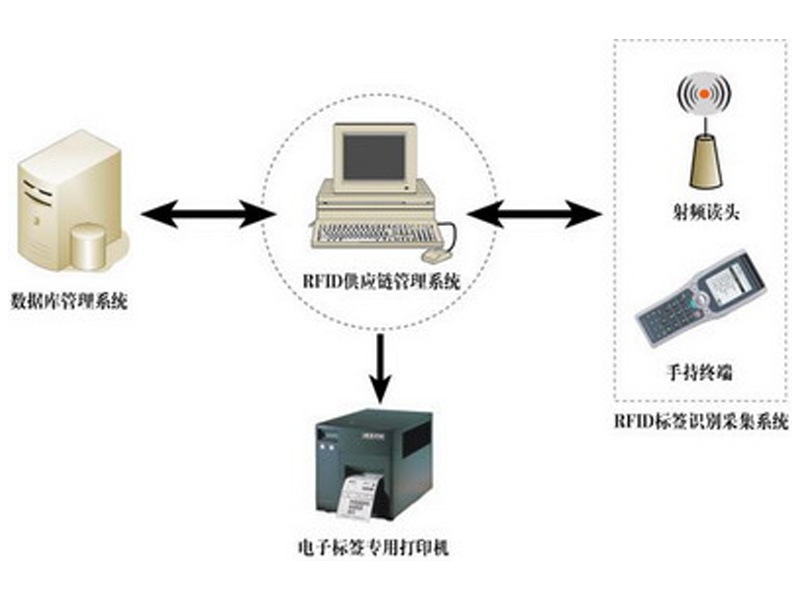
Radio frequency tags are physical carriers of electronic product codes (EPCs), attached to traceable items, and can be globally circulated for identification, reading, and writing. RFID (Radio Frequency Identification) technology, as a key technology for building the Internet of Things, has received attention in recent years.
Radio Frequency Identification (RFID) is a wireless communication technology that can identify specific targets and read/write related data through radio signals, without the need to establish mechanical or optical contact between the identification system and the specific targets.
The radio signal is transmitted through an electromagnetic field tuned to radio frequency, which sends data from tags attached to items to automatically identify and track them. Some tags can obtain energy from the electromagnetic field emitted by the recognizer during recognition, without the need for batteries; Some tags also have their own power source and can actively emit radio waves (electromagnetic fields tuned to radio frequencies). The tag contains electronically stored information that can be recognized within a few meters. Unlike barcodes, RF tags do not need to be within the line of sight of the recognizer and can also be embedded within the tracked object.
Many industries have utilized radio frequency identification technology. Attach the label to a car in production so that the factory can track its progress on the production line. The warehouse can track the location of drugs. Radio frequency tags can also be attached to livestock and pets, facilitating active identification of livestock and pets (active identification means preventing multiple livestock from using the same identity). RFID identification cards can allow employees to enter locked parts of buildings, and the RFID responders on cars can also be used to collect fees for toll roads and parking lots.